
AI Work Toolkit guide
Start with the workflow you want to improve.
AI tools are easier to choose when you begin with the work in front of you: an email, a document, a research task, meeting notes, or a privacy-sensitive decision.
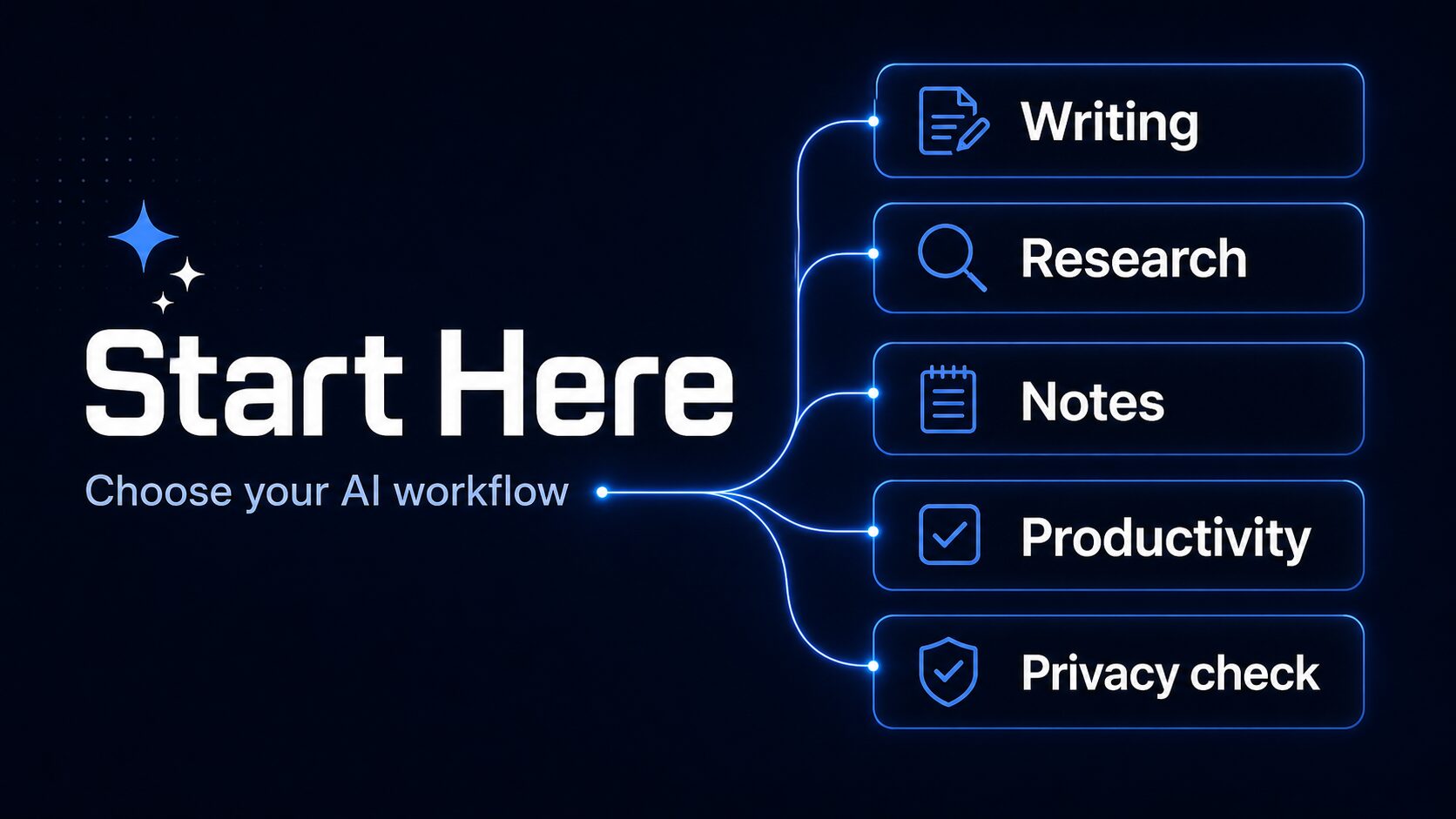
Read These First
If you are new to the site, start with the guide that matches your current work problem. These are the core AI Work Toolkit articles currently published.
For everyday work writing
Use this when you need help choosing tools for emails, reports, client messages, and clearer professional English.
For grammar and rewriting
Use this when you want better grammar, tone, fluency, and editing help without losing your meaning.
For choosing Grammarly or Wordtune
Use this when your decision is between a broad checker and a focused sentence rewriting tool.
For professional email help
Use this when replies, follow-ups, polite requests, and email tone are the work you repeat most often.
Priority Workflow Guides
Start with one of these consolidated guides. Each page owns a distinct work decision and links to supporting details where needed.
Choose Your Path
Most people do not need a giant AI stack. They need one tool that improves a repeated workflow without adding privacy risk, extra setup, or generic output.
How To Use Our Recommendations
What Makes This Site Different
Workflow-first reviews
AI Work Toolkit starts from the reader's actual task, then looks at tool fit, free-plan usefulness, privacy risk, pricing, and the kind of user who should skip the tool.
Built for English work, not hype
The site is especially useful for non-native English professionals, graduate students, remote workers, and solo operators who need clearer output and less decision fatigue.
Before You Choose A Tool
Pick one workflow you repeat every week. Read the matching guide, test the free version with a low-risk sample, and only then decide whether a paid plan is worth it. Popular tools are not automatically the right tools.
Learn Who Is Behind The Site
Trust matters when you are taking tool advice from a website. You can read more about the editorial approach, privacy-safe public identity, and review standards on the About the Editor and Editorial Policy pages.